You file one nail flat, then the next nail leans a little to the left. You fix it, and now it is shorter than the others. A few minutes later, one hand looks square and the other looks like a set of tiny hills. It feels like a shape this plain should be simple, but straight lines show every small slip.
This tutorial teaches you how to file square nails with a repeatable routine, so all ten nails end up matching. You will set one guide nail, hold the file at a fixed angle, and move in one direction. Then you will check the corners and the line across each hand before you stop.
It works because you are not trusting your eye on one nail at a time. Each nail gets compared with a guide. Plan for about 20 to 30 minutes on your first try, and work on dry nails in good light. Your dominant hand will be harder, as your other hand holds the file, so give it extra time.
What You Need
At a Glance
Remove all old polish
Polish can hide a crooked edge and make a straight line look wrong. Press a soaked cotton pad on each nail for 10 seconds, then swipe toward the tip. Polish on the free edge counts as well, so clean underneath with the corner of the pad. Wet nails are softer, so finish with clean, dry hands.
Find your shortest nail

That nail sets the length for the whole set. Hold both hands out flat, side by side, and look at the white edge of each nail.
Skip your thumbs for now, as they sit differently. Call this your guide nail. If one nail has broken very short, you can match the rest or leave that nail alone while it grows out.
Cut long nails down first

Filing a lot of length by hand wears your file and tires your wrist. If any nail is more than 2 mm longer than your guide, trim it with clippers first, leaving a small bit extra. Take off small bites, not one big snip, or the nail can crack.
Hold your file at a right angle

Angle is the part most guides skip. Set the file flat against the very tip of the nail at 90 degrees, like a wall meeting a floor. Rest your fingers on the table.
Tilting the file creates a slanted edge that looks fine from above and weak from the side. Hold it the same way for every nail.
File square nails straight across the tip
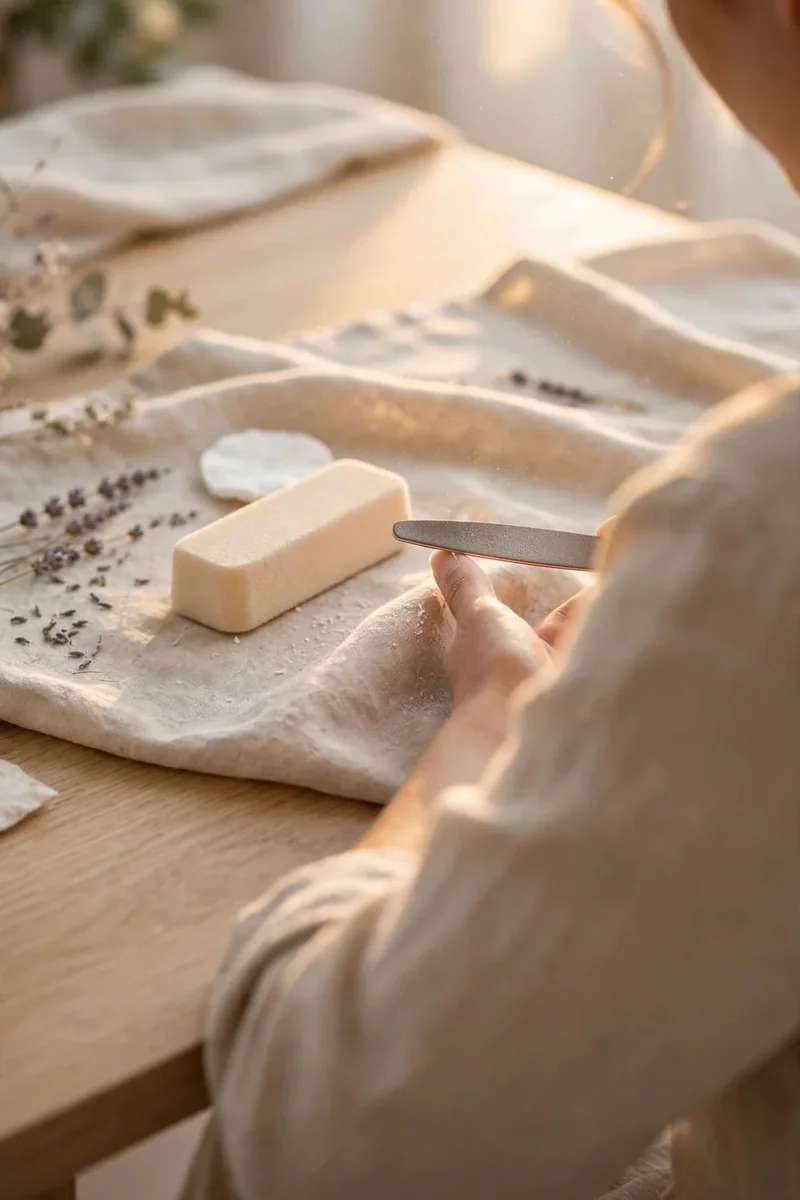
Start with one side and move the file to the other side in a single direction. Lift it, go back to the start, and repeat. Three to five light strokes at a time is plenty.
Sawing back and forth heats the edge and frays it. Stop often and look at your nail from above.
💡 Pro Tip
Spin your finger instead of your wrist. A small turn keeps the file steady and the line straight.
Check the line with a straight card

Your eye can miss a slope, but a straight edge will not. Hold a stiff card against your nail tip, level with the file line. Any gap on one side shows a lean.
Fix a gap with one or two strokes on the high side. Then check again, and stop as soon as the line sits flat.
Straighten the side walls
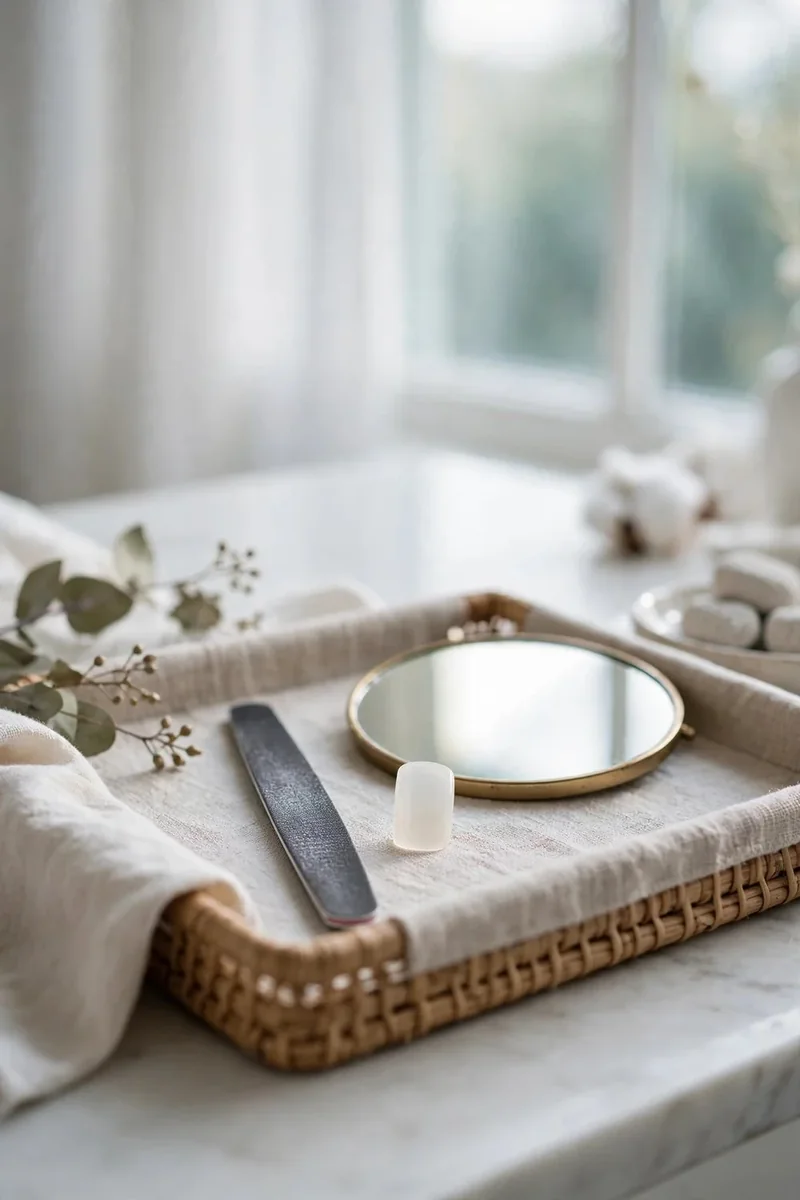
Square needs straight sides as well as a straight top. Hold the file along each side of the free edge and make one or two light strokes toward the tip.
Stay on the part of the nail past your fingertip. Filing down into the skin edge weakens the nail, and that spot will snag.
Soften each sharp corner

Sharp corners catch on hair, knits, and pockets. Rest the file at a 45 degree angle on one corner and make one light stroke. Repeat on the other corner.
Only one stroke, then look. Too many strokes turn a square into a round, and you cannot put that back.
Match your thumbs and dominant hand
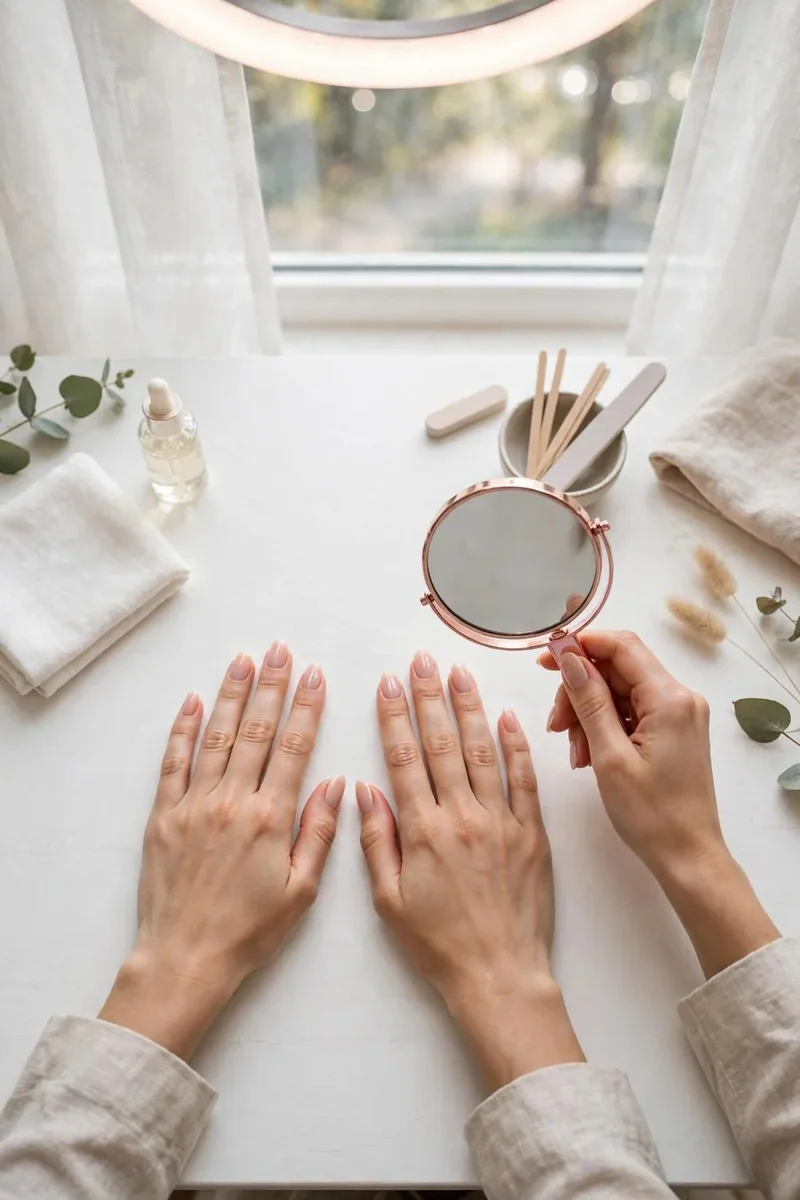
Hold both hands flat and side by side, then compare the shape of each nail with its partner on the other hand. Check that the two ring fingers match, the two index fingers match, and so on.
Your dominant hand may need a slower pass. File it in short bursts, with your wrist resting on the table.
Smooth each edge with a buffer
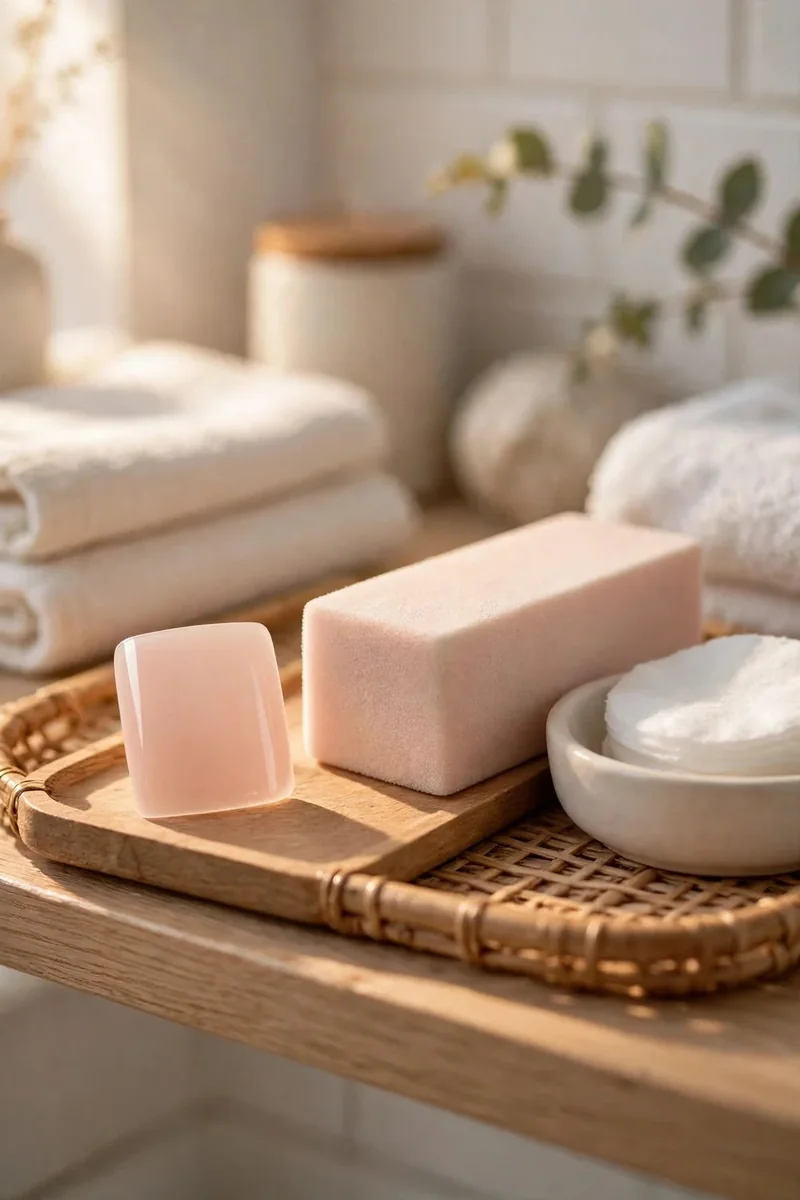
Filing leaves tiny fibers along the free edge, and they can snag on tights or start a peel. Sweep a soft buffer down the edge in one direction, front and underside.
Then run your fingertip across each nail. Smooth means you are done. Rough means one more light pass.
Rub oil into your fingertips

Oil softens dry skin and helps the nail edge stay flexible, and that makes the new line last. Massage one drop around each nail. Keep a small file in your bag too, since catching a snag early protects your square shape until your next session.
Fix It Fast
| If This Happens | Try This |
|---|---|
| One side sits higher | Check with a card and file only the high side. |
| The nail looks rounded | Stop rounding corners and let it grow out a little. |
| The edge feels rough | Move to a finer file, then buff in one direction. |
| The nail snags after filing | Soften the corner with one more light stroke. |
| Hands do not match | Set both hands flat and copy your best nail. |
Beginner Questions
Should I file wet or dry nails?
File dry. Wet nails are softer, so they bend and fray under the file.
Which file is best for natural nails?
A fine file around 180 to 240 grit suits most natural nails. Very coarse files are too rough.
Can I file square nails if they are short?
Yes. Square works at short lengths. Soften the corners well so they do not catch.
How often should I reshape my nails?
Check once a week. A few light strokes keep the line straight, and you will avoid big fixes.
Quick Reference Card
What You Need
Remover, cotton pads, clippers, fine file, stiff card, soft buffer, cuticle oil.
Steps
Your Nails Match Now
You now know how to file square nails so both hands match.
A stiff card and a steady angle did most of the work.
Try your new shape with a clean French tip or a bold color next.
Save this tutorial to your Nail Shapes and Filing Tips board for your next filing night.