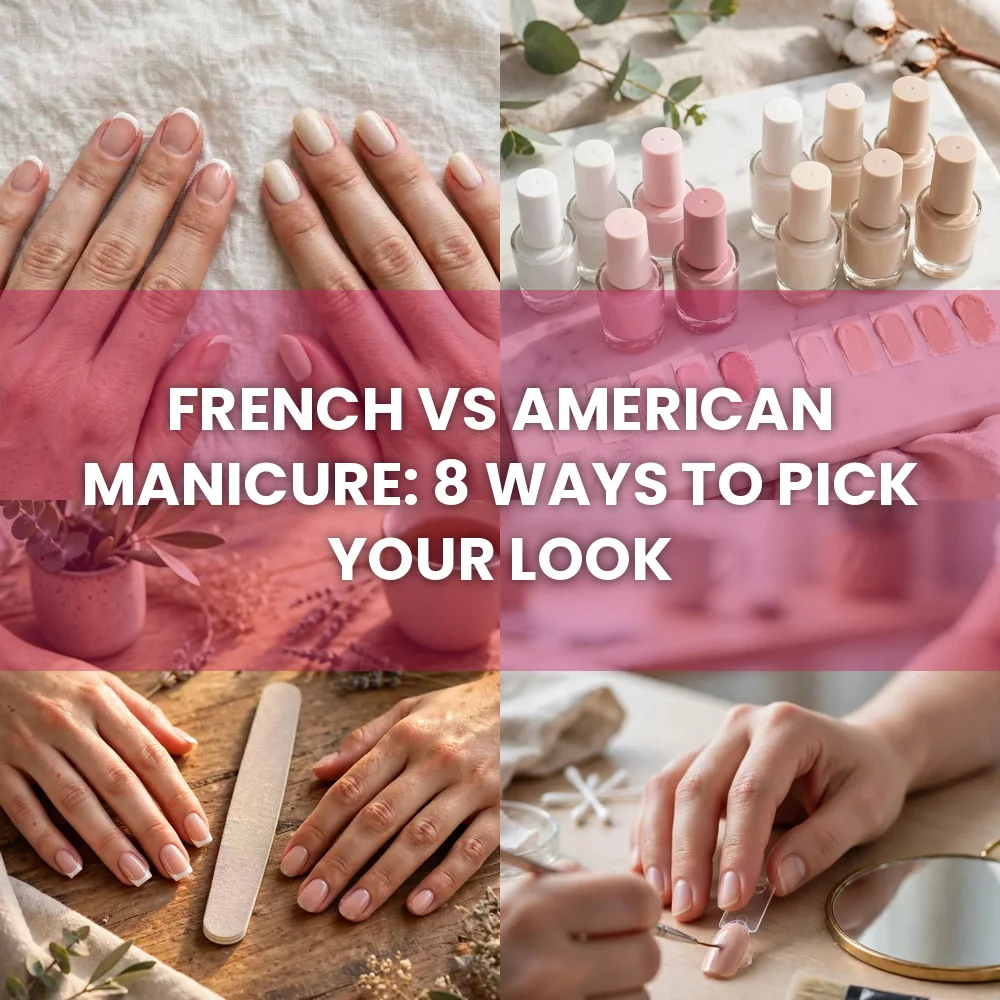
French and American manicures can look like twins at first glance. Both are soft, clean and simple, and both go with almost anything in your closet. That is why people mix them up all the time, and why you might sit down at a nail appointment and not know which one to ask for.
Both styles start with a pale base and a lighter tip. The difference is in how bold the tip looks, how the line sits, and how much of your nail shows. One is a crisp contrast you can spot from across the room, and the other is a gentle blend that looks like your nails just grew that way.
This guide compares French tips vs American manicure in eight simple ways. It covers the look, color, shape, skill, daily wear, upkeep, occasions and the final verdict, so you can pick the one that suits your hands, your style and your week.
What You Need
At a Glance
1. Look: Crisp Contrast or Soft Blend
The first thing to notice is how hard the line is. A classic French manicure has a bright white tip with a sharp smile line. You can see exactly where the tip starts, and that contrast is the whole point of the look.
An American manicure is softer. The tip is off white or creamy, and it fades into the base instead of stopping hard. From a normal distance, it can look like a healthy natural nail with a little extra polish.
If you love a clean, bold finish, French is the one. If you want a barely there look, American wins. Think of it like eyeliner: French is a sharp wing, and American is a smudged line.
2. Color: Pink and White or Warm Neutrals

Color is where the two styles split in a simple way. French tips use a clear pink or nude base with a bright white tip. The white is pure and cool, so it stands out against the pink.
American tips use warmer shades. The base is often a soft beige or warm nude, and the tip is cream or off white. Together, they look like one warm color family instead of two separate colors.
Your skin tone can help you choose. Cool, bright white suits a French look well. Warm cream suits an American look well. If you are not sure, hold both shades next to your hand in daylight and see which one blends better.
3. Nail Shape: Where Each One Sits Best

Shape changes how each style reads. French tips love a square or soft square nail, where the white tip has a straight edge to follow. The shape gives the tip a clean frame.
American manicures love a round or oval nail. The soft tip follows the natural curve of the nail, so nothing looks forced. Short nails suit American well for the same reason.
That said, both can work on most shapes. If your nails are long, French gives you a strong, polished look. If your nails are short, American gives you a soft, natural look.
4. Skill: How Forgiving Each One Is

French tips need a steady hand. A wobbly smile line shows at once, because the white is so bright. That is why many people use French tip guides or a thin brush for this style.
American tips are far more forgiving. A soft tip hides a small wobble, and the cream color blends into the base. If you are new to nail art, American is a kind place to start.
Both get easier with practice. Start with American if you want a win on your first try, then move to French when you feel more confident.
5. Everyday Wear: Which One Shows Life First

Daily life shows on bright white fast. Cooking, typing, gardening and cleaning can stain a French tip, and a small chip is easy to see. A top coat helps, but it will not hide everything.
American tips hide daily wear better. Cream is close to the base color, so a small chip or stain blends in. If you use your hands a lot, this is a real advantage.
Wear gloves for cleaning and reapply top coat every few days. Both styles last longer with that simple habit.
6. Upkeep and Growth: What Happens in Week Two
By week two, the gap at the cuticle shows on both styles. The difference is how obvious it is. On a French manicure, the bright tip pulls your eye to the nail, so the gap can stand out more.
On an American manicure, the soft color hides the gap a little better. The whole nail looks more even as it grows, so you can often stretch it a few extra days.
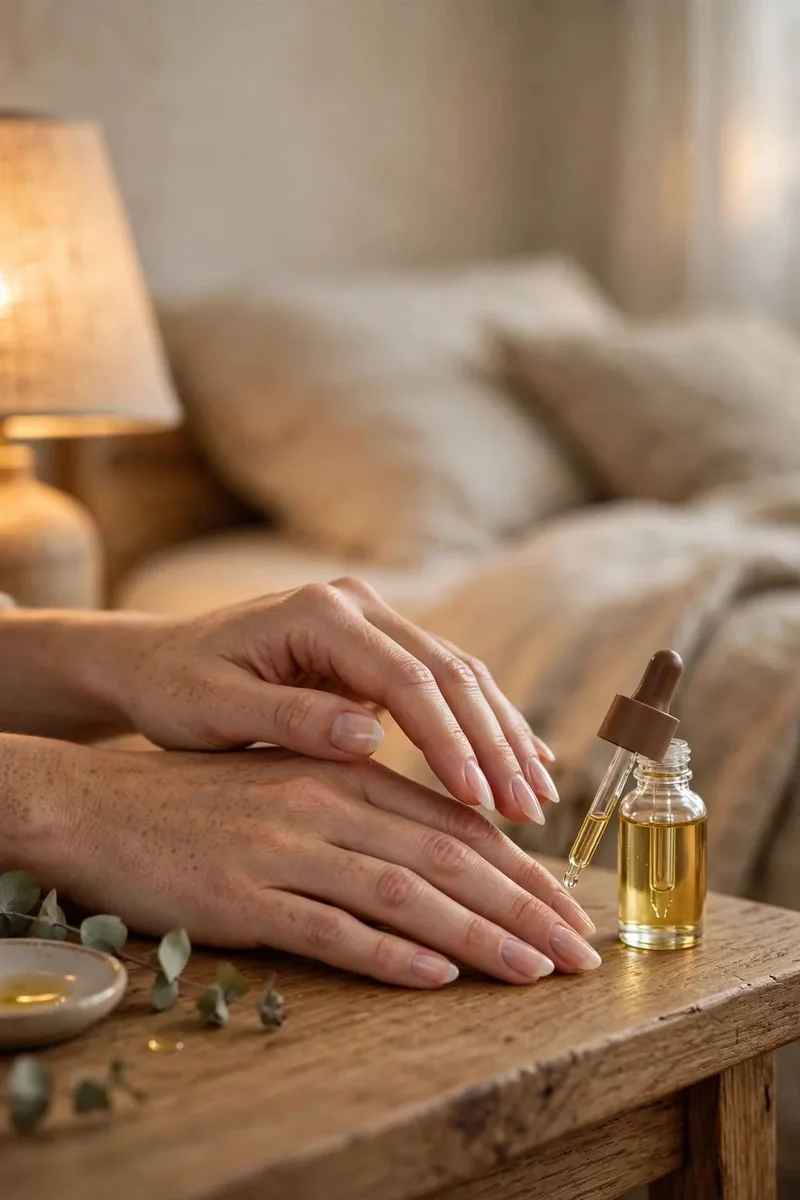
Both last about one to two weeks with regular polish, and longer with gel. Keep cuticle oil on hand, and do not peel polish off, as that can damage the nail.
7. Occasion: Where Each Look Feels Right

Occasion matters too. French tips suit weddings, formal events and job interviews, where a polished look counts. The bright tip reads as neat and intentional.
American tips suit everyday life, casual work and travel. They look good without drawing attention, so they work when you want your nails to blend in, not stand out.
Neither is wrong for any event. Pick the one that matches how you want to feel that day, not just the dress code.
8. The Verdict: Which One Should You Choose

So which one should you choose? Pick French if you want a bold, polished look, you love a crisp line, and you have time for careful painting or a salon visit. Pick American if you want a soft, natural look, you are new to nail art, or you want a style that hides wear well.
You can also try both. Do American for everyday weeks, and French for special events. Or do French on long nails and American on short nails. There is no rule that says you must pick one forever.
Choose the One You Will Enjoy
French and American manicures are both simple, clean and easy to love. French gives you contrast and polish, while American gives you softness and ease. The best choice is the one you will enjoy wearing, not the one that looks best in a photo.
Try one this week and see how it feels on your hands. If you love it, keep it. If not, try the other next time. Your nails will tell you which one suits you best.